
To know about CPR instructor course cost in Chicago, visit CPR Training Center
Most people assume they’ll never need life-saving skills – until the day they do. Emergencies don’t ask for permission or wait for professionals to arrive. When a heart stops, or breathing fails, the knowledge you carry becomes the only thing standing between life and loss.
In those critical seconds, knowing how to respond can make all the difference. That’s why CPR and BLS are considered core skills in emergency preparedness. Although the two are closely related, they serve different purposes and are meant for different types of responders.
Understanding the differences between BLS and CPR, how they work, and what they have in common can help you choose the right training and act promptly during emergencies.
Let’s start with CPR – the most familiar course among the two.
CPR Explained: Life-Saving Skills for the General Public
CPR, or cardiopulmonary resuscitation, is a method of manually pumping blood to a person’s vital organs and providing oxygen to their lungs when their heartbeat or breathing stops. It’s intentionally designed to be simple, so common citizens can easily learn it and step in during an emergency, buying time until emergency responders take over.
Performing it correctly gives ordinary folk the power to save lives and prevent the risk of serious complications, such as brain damage, organ failure – and even death.
1. What CPR Training Focuses On
CPR training focuses on two main goals:
- Keeping blood flowing through the body
- Maintaining oxygen in the lungs.
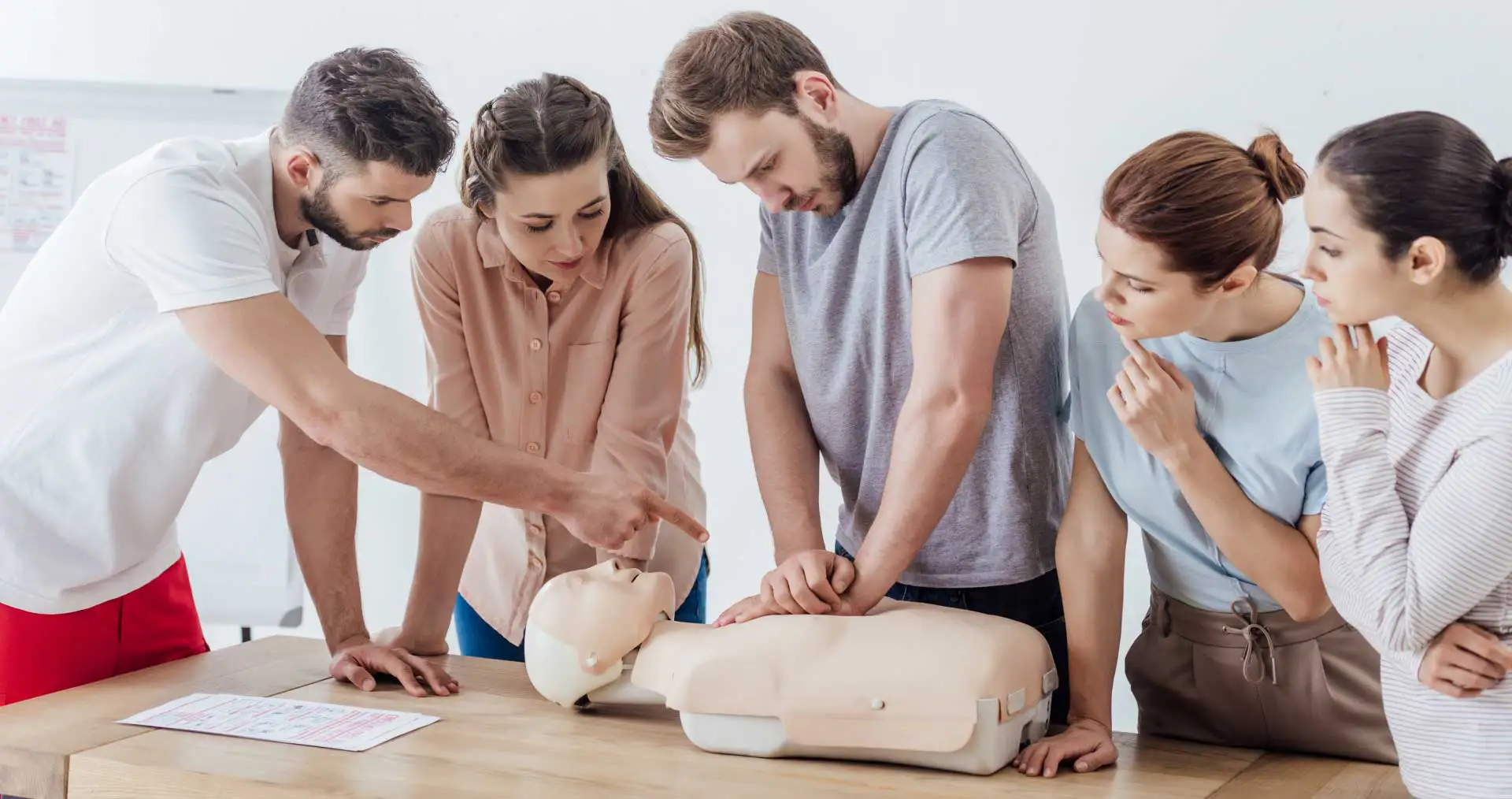
Courses are designed to give you hands-on practice and confidence so that your actions become second nature during critical situations.
Here’s what a typical CPR course covers:
Recognizing and Responding to an Emergency
- How to quickly identify a cardiac or breathing emergency
- Checking responsiveness and calling for help
- Starting chest compressions immediately
Chest Compressions
- Proper hand placement, depth, and rhythm to make every push count
For adults
- Two rescue breaths for every 30 compressions
For children and infants:
- Two rescuers: two breaths for every 15 compressions
- Single rescuer: two breaths for every 30 compressions to prevent fatigue
Hands-Only CPR
- Focuses on pushing hard and fast in the center of the chest without rescue breaths
- Ideal when a bystander isn’t comfortable giving breaths or if help is already on the way
AED Use
- How to safely operate an automated external defibrillator and follow voice prompts
- Proper placement of electrode pads on adults, children, and infants
- Combining AED use with CPR to increase the chances of survival
Who Typically Needs CPR Certification
CPR certification is usually required for people who work in childcare, education, fitness, and public safety – such as teachers, coaches, lifeguards, and safety officers. If you’re wondering about the CPR instructor course cost in Chicago, it’s a worthwhile investment for anyone who wants to be prepared – because even if it’s not part of your job, knowing CPR is still a huge advantage. Parents, caregivers, and family members of older adults can all benefit from having these life-saving skills at their fingertips.
When is CPR Enough to Save a Life?
Imagine walking through a busy park when someone suddenly collapses right in front of you. Without hesitation, a bystander calls 911, while someone else starts chest compressions right away. An AED is quickly brought over, instructions are followed, and CPR continues until paramedics arrive.
In such situations (where immediate action is needed and professional responders aren’t yet on scene), CPR alone is enough to keep a person alive, becoming the difference between survival and tragedy.
CPR Instructor Certification Courses
CPR Instructor Certification is for anyone who already knows CPR and wants to take their skills to the next level by teaching others. The training covers everything you need to guide students confidently and safely.
These are the main components of the course:
- Teaching Techniques: How to explain CPR clearly and guide students through hands-on practice
- Evaluating Performance: Checking that learners perform compressions, breaths, and AED use correctly
- Course Management: Organizing practice sessions, keeping students engaged, and managing time effectively
- Certification Rules: Understanding requirements and the process to issue valid CPR certificates
- Skill Reinforcement: Practicing CPR yourself while teaching, which helps solidify your own knowledge
BLS Explained: Advanced Life Support for Healthcare and First Responders
While CPR is meant for the general public, Basic Life Support (BLS) is designed for professionals who respond as part of their job. BLS still includes CPR, but it goes a step further by preparing responders for more complex situations, usually in medical settings. If you’re considering teaching these life-saving skills, understanding the BLS and CPR instructor course cost in Chicago can help you plan your professional path.
However, unlike CPR, which you can do on your own, BLS requires multiple responders to be involved. The training teaches you how to work as a team, assess the patient promptly, and coordinate smoothly with others during critical scenarios.
What Makes BLS More Advanced Than CPR?
The difference becomes clear once you start BLS training. While CPR can be performed by one person, BLS focuses on team-based care. Participants learn how to assign roles during an emergency, rotate compressions, coordinate rescue breaths, and communicate clearly with other responders to keep care continuous and effective.
BLS also goes deeper into assessing the patient. Responders are trained to spot breathing problems, circulation issues, airway blockages, or signs of shock, and adjust interventions on the spot.
This added level of collaboration and quick decision-making is what makes BLS more advanced than standard CPR.
Medical Equipment Included in BLS
BLS also includes certain professional medical equipment that most people don’t use in everyday situations:
- Bag-Valve Mask: For providing ventilation when the patient isn’t breathing effectively
- Oxygen Delivery Devices: Masks or nasal cannulas to supply oxygen when needed
- Airway Management Tools: Including oropharyngeal (OPA) and nasopharyngeal (NPA) airways to keep the airway open
- AED: While a part of CPR, it’s also used to perform BLS
- Suction Devices: To clear the airways of fluids that could block breathing
If you want to know about CPR instructor course cost in Chicago, click here.
Professional Scenario Where BLS is Required
Picture this: a patient in a hospital ward is having trouble breathing, and their heart rate is unstable. At first, it might seem like CPR could help – but it only covers chest compressions and basic rescue breaths.
That’s not enough in this case, because the patient needs several things at the same time: their airway managed, oxygen delivered, vital signs monitored, and prompt assessments made as their condition changes.
This is where performing BLS is the best option to stabilize the patient and increase their chances of survival.
BLS Instructor Certification Courses
BLS Instructor courses are for professionals who already have BLS skills, but also want to impart their knowledge to others. These programs focus on preparing you to lead training sessions, guide hands-on practice, and help learners gain confidence in real-life emergencies.
Key parts of the course include:
- Explaining Skills Clearly: Learning how to break down BLS steps so students understand what to do in an emergency
- Checking Student Performance: Observing and giving feedback to ensure compressions, ventilations, airway management, and AED use are done properly
- Running Practice Sessions: Organizing drills, keeping participants engaged, and making sure the training flows smoothly
- Certification Guidelines: Understanding what’s required to officially certify students
- Strengthening Your Own Skills: Teaching others helps you refine your own technique
- Team Coordination Practice: Training students on how to work together during multi-rescuer scenarios
What Do Both CPR and BLS Have in Common?
If you are concerned about CPR instructor course cost in Chicago, get all the info at CPR Training Center.
Despite their differences, CPR and BLS share the same mission: keeping someone alive until higher-level care arrives. Both teach you to act quickly, keep blood flowing, and make sure oxygen reaches the lungs. They also help you stay calm, think clearly, and follow each step correctly so your efforts can lead to a positive outcome.
All in all, whether you’re performing CPR on your own or working with a team in a BLS scenario, the goal is the same – giving the person the best chance to survive.
Training Experience Compared: What to Expect in a CPR vs BLS Course
Feature |
CPR |
BLS |
| Audience | Anyone who wants to learn basic life-saving skills | Healthcare professionals, first responders, and anyone trained to provide advanced care |
| Focus | Single-rescuer response, keeping blood and oxygen moving | Team-based care, patient assessment, and advanced life support techniques |
| Skills Learned | Chest compressions, rescue breaths, hands-only CPR, AED use | CPR + team coordination, airway management, ventilations, oxygen delivery, use of professional equipment |
| Equipment Used | Manikins and AED trainers | Manikins, AED trainers, bag-valve masks, airway tools, oxygen devices, suction equipment |
| Decision-Making | Simple step-by-step instructions to follow during emergencies | Quick thinking, making fast decisions as the patient’s condition changes, and handling several tasks at the same time. |
| Duration | A few hours, usually one session | Longer course, can take several hours or multiple sessions, depending on the program |
| Certification | Valid for 2 years | Valid for 2 years, may be required for certain jobs |
| Hands-On Practice | Focused on getting comfortable with compressions, breaths, and AED use | Includes team drills, role assignments, and multi-rescuer scenarios for emergency situations |
BLS vs CPR – Which One Is Right for You?
Choosing between CPR and BLS comes down to your situation. CPR is perfect for everyday emergencies – at home, work, or out in public – giving you the skills to step in and help right away. Whereas BLS is meant for more complex cases, like in hospitals or clinics, where you work with a team, use medical tools, and make quick assessments to stabilize the patient until advanced care arrives.
No matter which skill you choose to learn, the goal stays the same: giving someone the best chance to survive.
At the CPR Training Center, we make gaining CPR and BLS skills simple and easy to understand. Whether you’re starting fresh or updating your abilities, our instructors guide you every step of the way including CPR instructor course cost in Chicago.
Sign up today and possess the power to save a life!
FAQs
1. Is BLS the same as CPR?
No, CPR is a basic life skill anyone can use to keep blood and oxygen moving if someone’s heart or breathing stops. While BLS is more advanced – and includes CPR as a part of it.
2. What are the 5 steps of BLS?
The main steps in BLS are:
1) Check the scene and person
2) Call for help
3) Open the airway and check breathing
4) Start CPR
5) Use an AED and other tools
3. Are CPR and BLS the same thing?
They’re similar – but not the same. CPR is a basic skill that requires a single person. Whereas BLS is for professionals and includes CPR – plus extra steps like team work, patient checks, and medical tools.
4. How long does it take to learn BLS?
BLS takes a few hours up to a full day – You’ll learn how to work with others, keep someone’s airway clear, use emergency equipment, and handle urgent situations safely.
5. What is the most recognized CPR certification?
The most trusted certifications are from the American Heart Association or American Red Cross. They are good for two years and accepted at schools, workplaces, and hospitals – Whereas if you’re thinking about teaching, check out the instructor course cost in Chicago at CPR Training Center.